Return Merchandise Authorization (RMA): Definition, Process, and Optimization

Content Writer
- What is a Return Merchandise Authorization (RMA)?
- The RMA Process Step by Step
- Why Is an RMA System Crucial for Your Business?
- Protection Against Return Fraud
- Implementation of an Effective RMA System
- The Cost Factor of Returns: How to Reduce the Return Rate
- Modern RMA Solutions: Self-Service Portals and Advanced Features
- Conclusion: Best Practices for Optimizing Your RMA Process
- FAQ
Why do customers often remember their return experience more vividly than the actual purchase? Because returns are a critical moment of truth in which companies prove how professional, reliable, and customer-centric they truly are. Especially in the B2B sector, where supply chains are complex, products are valuable, and business relationships are long lasting, the return process can determine trust, partnership, and future orders. A Return Merchandise Authorization (RMA) is not just a formal return approval process but also a strategic tool for structuring, controlling, and providing transparency across the entire returns process.
While purchasing and shipping processes have become largely automated, returns management remains time-consuming, error-prone, and opaque in many companies. Without clearly defined procedures, the risks of cost losses, process disruptions, customer frustration, or even fraud increases significantly. A professionally designed RMA system delivers clarity instead of complexity, efficiency instead of additional effort, and data intelligence instead of assumptions. It transforms returns from an operational hassle into a true competitive advantage that is scalable, traceable, digital, and customer-centric.
What is a Return Merchandise Authorization (RMA)?
Many companies use the term daily, yet surprisingly often there is no shared working definition across teams.
What is RMA? The Return Merchandise Authorization describes a regulated return approval process in which customers must request authorization before physically returning goods, including documentation of reasons, conditions, quantities, and deadlines.
The meaning of RMA refers to the systematic control and authorization of returns based on clear, verifiable information rather than uncoordinated shipments. This process is an integral part of structured returns management and is widely used in B2B environments, retail, manufacturing, and after sales services.
An RMA is documented using a defined RMA form or RMA slip. This ensures that data is complete and traceable before the goods are shipped back. Key information includes product identification, purchase or order references, defect descriptions, return reasons, packaging instructions, and contact persons. This creates a clear operational basis for warehouse, support, technical, and accounting departments.
The RMA Process Step by Step
Returns generally follow similar procedures, even small differences can significantly impact speed, costs, and internal capacities. A professional RMA process requires fixed structures that are reproducible and consistent in every case. The following RMA steps represent a proven model for B2B organizations, distribution, e-commerce, and service networks.
Initiating the RMA Request
It begins with an initial notification. The customer does not immediately send the goods but first submits a request through the designated communication channel.
Common methods include
- Self-service RMA portal
- Email with RMA form attachment
- Telephone inquiry for cases needing clarification
A digital RMA portal consistently delivers higher data quality. Email and telephone are suitable for technical diagnostics, individual service contracts, or products requiring mandatory inspection, such as machinery, electronics, or spare parts.
A practical RMA form should contain at least the following essential fields:
| Mandatory Field | Purpose | Note |
|---|---|---|
| Customer data & contact | Avoid follow-up questions | Direct contact instead of shared mailbox |
| Order or invoice number | Clear assignment | Optional: PO reference |
| Product ID / serial number | Technical verification | Photo attachment reduces misunderstandings |
| Reason for return | Analysis & evaluation | Selection fields instead of free text |
| Condition of goods | Assessment of next steps | Clear categories, ideally limited to three levels |
This preliminary data entry minimizes unnecessary follow-up questions, reduces inspection times in the warehouse, and prevents incorrect decisions
Assignment and Importance of the RMA Number
Clear identification is essential. The RMA number, often called the return authorization number, is generated by the company and accompanies the return throughout the entire workflow. It enables tracking across ERP, WMS, and ticketing systems, prevents time-consuming searches in the warehouse and by support teams, and ensures accurate allocation of every return.
The number controls:
- Status tracking (RMA tracking)
- Assignment within warehouse processes
- Service documentation
- Prioritization in SLA-driven environments
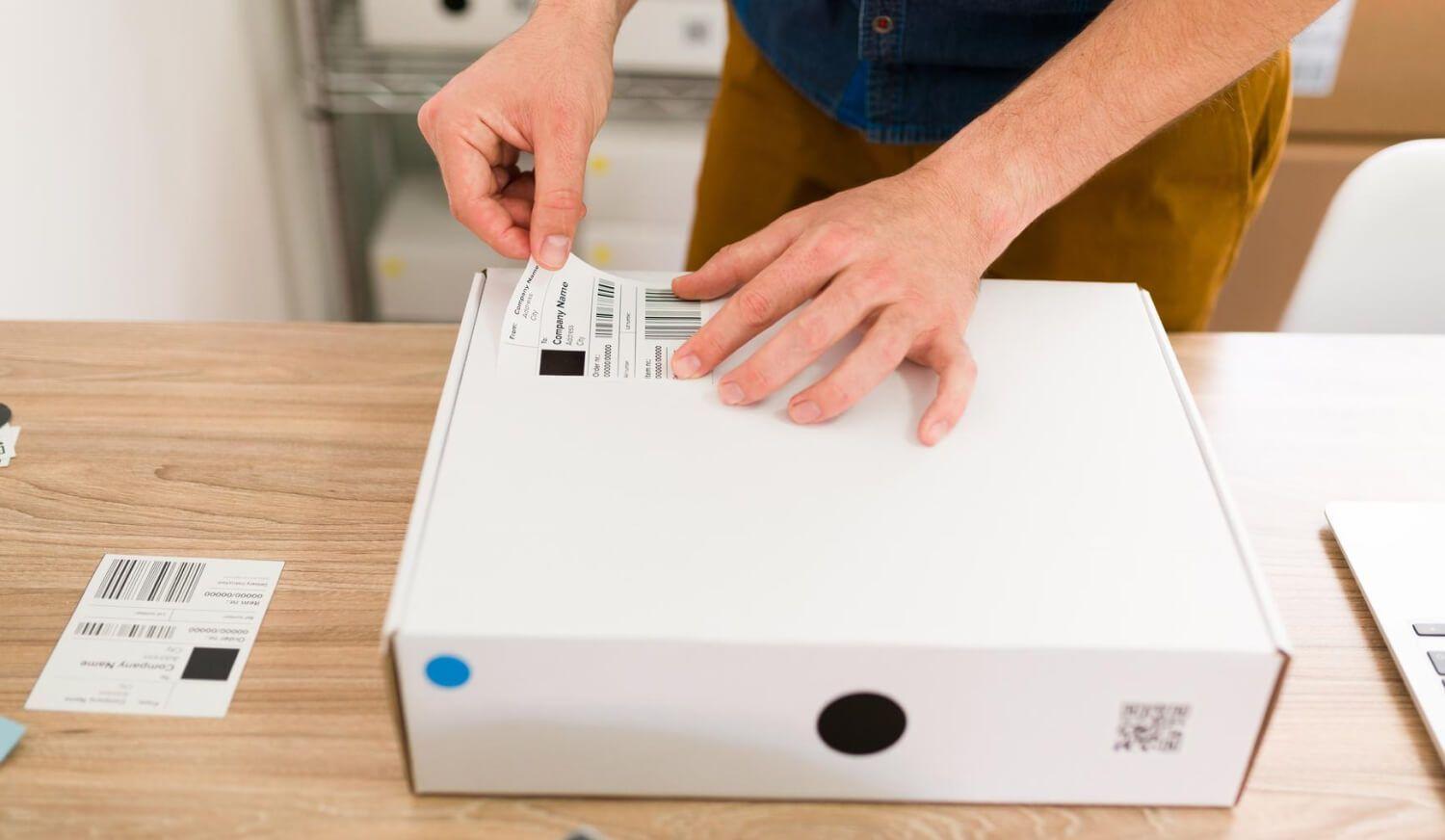
Many companies also use an RMA barcode, which further reduces error rates and eliminates manual data entry.
Proper labeling speeds up decisions and ensures process security. This represents the practical value of RMA for modern service and returns management.
Return and Inspection of Goods
Once authorized, the goods are sent back following clear RMA policy guidelines, including packaging instructions, labeling, address, logistics provider, deadlines, and often photo documentation prior to shipment.
At the warehouse, the inspection proceeds in three logical steps: receipt and scanning, visual inspection, and technical or functional testing. Results are recorded directly in the RMA system, as subsequent additions are often incomplete and may lead to disputes.
Processing the Return
Processing is guided by predefined rules and objective data, not subjective impressions. Possible outcomes include:
- Refund or credit
- Replacement shipment
- Repair or refurbishment
- Partial credit based on condition
- Rejection with documented justification
- Forwarding to manufacturer or service partner
Clear responsibilities prevent delays. Technical cases are handled by specialist departments, while commercial decisions are assigned to disposition or accounting.
Communication and Tracking
A professional RMA workflow provides transparent status updates and traceable decisions. Customers benefit from clear and simple status notifications such as
reported – received – under review – decision – completed.
Well-defined RMA steps lead to faster decisions, fewer follow-up questions, and clean data records, keeping the process stable even at higher volumes or with changing teams.
Why Is an RMA System Crucial for Your Business?
An effective RMA system is crucial for your company because it operates behind the scenes but impacts every team—from purchasing, warehousing, and technical service to finance and customer support. Companies that manage returns in a structured way avoid operational disruptions, reduce internal coordination loops, and ensure traceable case processing without room for interpretation.
A professionally built process improves service quality, processing times, inventory accuracy, complaint costs, and brand perception—especially in B2B, where reliability and transparency often influence long-term business decisions.
Increasing Customer Satisfaction and Loyalty
A clear and well-organized return and pick-up path removes customer uncertainty. Customers receive reliable information and feel that service processes are taken seriously. Experiencing a professional RMA process changes how they view the entire company, as issues are addressed systematically rather than concealed.
In B2B relationships, trust comes not from marketing texts but from functional processes, specific answers, accessible contacts, realistic deadlines, and transparent decisions. Transparent, fair, and rule-based returns handling significantly increases the likelihood of future orders compared to companies that avoid difficulties or provide unclear statements. A positive return experience often matters more than a smooth order; many buyers ultimately judge a partner on how they behave when things don’t go as planned. A well-thought-out RMA system delivers what sales arguments alone cannot.
Efficient Organization and Cost Control
A structured RMA process prevents material losses, unnecessary double handling, chaotic warehouse movements, and unclear responsibilities. Without fixed procedures, returns typically end up at the wrong receiving points, are inspected late, or are mistakenly stored, leading to costs that cannot be retroactively corrected.
An RMA system enables predictable workflows and avoids exceptions, accelerating goods receipt, technical inspection, and internal decision-making. Warehouse space remains free of unidentified packages, service tickets progress transparently, and purchasing and accounting maintain full visibility over credits and SLA consequences.
Companies that digitally manage their RMA process and implement RMA tracking reduce internal loops, minimize clarification efforts, and increase punctuality. This consequently lowers indirect costs, which are not directly visible in any cost center but have a significant overall impact.
Analysis of Return Data for Product and Service Improvement
Returns provide valuable insights about the product, packaging, shipping route, product description, and how the end customer handled it. However, many companies only record the return reason superficially, often as free text without categorization, making the data difficult to use later.
A professional RMA system uses fixed categories, numbered return reasons, and condition levels. This creates a reliable picture of whether issues are caused by production deviations, unsuitable packaging, user errors, false expectations, or missing technical documentation. Particularly in logistics, it becomes clear which process steps function reliably and where structural improvements are necessary.
Properly analyzed data influences product development, marketing texts, packaging design, and quality inspections. Decisions are then based on facts rather than individual reports or assumptions. Companies that systematically evaluate return data enhance service quality and reduce return rates over time.
Protection Against Return Fraud
Return fraud is not limited to online retail. B2B processes are also affected, particularly for high-value products, spare parts, technical devices, and seasonal items. Without clear identification features, traceable records, and verified serial numbers, gaps emerge that invite abuse.
An RMA system with a clear RMA number, barcode, and documented inspection steps significantly reduces risk. Comparing serial numbers, proof of delivery, product condition, and warranty terms creates transparency. Every discrepancy can be documented and legally evaluated if necessary, providing protection against intentional deception and misunderstandings that can cause the same financial damage.
Implementation of an Effective RMA System
An RMA system is not created by merely filling out a document but through clear rules, technical implementation, and consistent usage across all departments. Company size is not critical; what matters is the ability to build a return process that is stable, transparent, and scalable.
Manual vs. Automated Systems
Many smaller companies start with email, spreadsheets, and manual filing. This approach is understandable at first, but bottlenecks appear as volume grows: no status history, duplicate processing, lost attachments, insecure documentation, limited analytics, and no integration with ERP or WMS systems.
An automated RMA system integrates all steps into a digital workflow: request, inspection, issuance of the RMA number, documentation, warehouse status, decision-making, communication, and archiving. This reduces errors, shortens processing times, and creates a scalable, standardized process without individualized workarounds.
Manual systems become a bottleneck when multiple people work simultaneously. Automated systems establish uniform rules, traceable data, and lower process costs, enabling efficient RMA Management.
Selection and Integration of the Right Software Solution
Choosing RMA software does not begin with the tool itself but with identifying the necessary data points, roles, status levels, reporting objectives, and existing systems. Seamless integration into ERP, e-commerce platforms, warehouse solutions, ticketing systems, and shipping platforms prevents duplicate data entry. APIs are essential to ensure the RMA process is fully embedded in the overall system landscape rather than existing as an isolated workflow.
Important checkpoints when choosing software:
| Criterion | Meaning |
|---|---|
| Mandatory data and status model | Ensures Unified workflow |
| API availability | Integration with ERP, WMS, shop, and support |
| Barcode and document handling | Error-free identification |
| Role and approval models | Clear responsibilities |
| Reporting functions | Analysis of return reasons |
| Automated communication | Status transparency |
A good RMA solution adapts to your existing processes, not the other way around. Companies benefit most when the software not only supports data collection, but also makes the entire RMA workflow manageable and traceable.
The Cost Factor of Returns: How to Reduce the Return Rate
In many companies, returns are treated as inevitable, but the costs go far beyond logistics. Inspection times, communication, loss of value, repackaging, documentation, cancellations, and unpredictable warehouse management all contribute significantly. Effective returns management starts not with the RMA form but with understanding why goods are returned in the first place.
Return reasons often follow recurring patterns, which shed light on where errors arise and which optimizations make sense. Typical causes include:
| Cause | Description | Solution Approach |
|---|---|---|
| Missing or imprecise product data | Technical values, dimensions, variants, or accessories not clearly communicated | Data sheets, size charts, photos, videos |
| Expectation mismatch | The customer envisions the function, appearance, or scope of delivery differently | More detailed product descriptions |
| Packaging damage | Transport stress or unsuitable carton | Appropriate padding materials and test shipments |
| Incorrect product selection | Wrong model or non-compatible version | Purchase advice and decision aids |
| Missing assembly or operating instructions | Incorrect use leads to complaint | QR guides, clear instructions |
| Incorrect delivery | Picking error or poor labeling in the warehouse | Barcode matching, scanner requirement |
A well-structured product information strategy prevents unnecessary returns. Businesses selling technical products benefit from datasheets, size charts, exploded drawings, or video tutorials. In e-commerce, detailed images from multiple angles and short feature videos reduce misunderstandings before purchase.
In B2B, adding a quick clarification step during ordering for critical parameters can prevent an entire RMA process, reducing the return rate without altering the offer.
Modern RMA Solutions: Self-Service Portals and Advanced Features
Companies upgrading their RMA workflows are adopting solutions that allow a stable, process-driven approach without manual intervention. The trend is moving toward self-service RMA portals, where customers can independently create requests, document returns, and track status via RMA tracking anytime, without waiting, follow-ups, or repeatedly submitting documents.
Today’s digital RMA systems offer advanced features that go far beyond traditional methods, such as:
- Automatic RMA number assignment
- Barcode labels and scan-based returns
- Rule-based decision path logic tailored to error types
- File uploads for diagnostics, screenshots, and serial numbers
- Automatic shipping labels upon approval
- RMA policy rollout by product type or contract
- Real-time dashboard statistics
These digital systems reduce the burden on specialist departments, prevent information loss, and ensure consistent communication based on documented data. Companies benefit from a fully reproducible RMA process that does not rely on individual employees.
Conclusion: Best Practices for Optimizing Your RMA Process
An RMA workflow functions reliably when data, rules, communication, and responsibilities are clearly defined without room for interpretation. Success is measured by short processing times, clear decisions, low error rates, and robust reporting. Companies that consistently define, document, train, and implement RMA best practices stabilize their returns process and prevent unnecessary escalations across the entire service and analysis cycle.
Guidelines for daily operations:
| Recommendation | Goal |
|---|---|
| Clear RMA policy, accessible internally and externally | Fewer individual cases |
| RMA form with mandatory fields and upload | Consistent data quality |
| RMA number + barcode instead of free text | Accurate stock assignment |
| Portal with RMA tracking | Transparent communication |
| Categorized return reasons | Data mining and process improvement |
| SLA-based handling | Expectation management |
| Analysis and consultation with product management | Sustainable optimization |
Companies that regularly follow and update their RMA best practices after audits or lessons learned maintain a stable and adaptable process, even with growing volume or changing product lines.
Returns will never disappear entirely. The key question is: Who controls the situation, the company or chance? A consistently structured RMA system ensures returns do not become hidden cost centers, but instead serve as a strategic management tool.
FAQ
How do I request an RMA online?
You can submit your RMA request using an RMA portal or form, providing your order reference, fault description, and contact details. You will then receive a return authorization number (RMA number) for further processing within the RMA workflow.
What are the deadlines for an RMA return?
Deadlines depend on your contract, warranty, and the company’s RMA policy. The timeframe starts only after you receive the RMA number, not at the time of your initial complaint.
Who bears the costs for RMA returns?
Responsibility depends on the reason such as material defect, incorrect shipment, or ordering error. Details are specified in your RMA policy or service contract.
What happens when a product is returned damaged or incorrectly?
The condition is documented in the warehouse, checked using serial numbers and photo attachments, and recorded in the RMA system. Decisions about credit, repair, replacement, or rejection are based on this data.
How can I track the status of my RMA return?
In the customer portal, RMA tracking shows your current status, such as received, under review, or pending decision. The RMA number allows precise tracking at any time.
Can I cancel or change an RMA?
Changes are possible as long as the item has not yet been inspected or assigned to a processing step in the RMA workflow. Adjustments should be submitted in writing under the same ticket number.
What are the most common reasons for returns?
Typical causes include unclear product information, selection errors, shipping damage, missing instructions, or technical discrepancies. Structured categories in the RMA system are crucial to analyze trends and optimize processes.
How does RMA in e-commerce differ from traditional stores?
RMA is a structured authorization process that collects key data before any return, ensuring review, assignment, and decision-making are traceable. In e-commerce, this happens digitally via forms, portals, or tickets. In physical retail, inspection is done on-site—often faster, but with less standardized documentation.
What are the benefits of an automated RMA system for businesses and customers?
An automated RMA system reduces processing time, increases data quality, enables real-time RMA tracking, and provides actionable return reasons. Customers receive reliable and predictable decisions, while companies maintain process stability and minimize errors.