Shipping to France: Costs, Duration & Providers

Editorial Manager
- What does shipping to France cost?
- How to pack a parcel properly for France?
- Permissible size of shipments to France
- Which goods are not allowed to be sent to France?
- Delivery time for parcels to France
- Address format for shipping to France
- Postal codes for a parcel to France
- Customs regulations for shipping to France
- Shipment tracking to France
- Shipping to France with Shipstage
- FAQ
A satisfied customer in Paris or Lyon is the result of reliable delivery from Germany.
Yet, the journey from the warehouse to the doorstep in France can be full of pitfalls: shipping prices vary, express deliveries are not always the best choice, and customs rules shouldn't be underestimated. France is also one of Germany’s most important trading partners for e-commerce shops, wholesalers, or small online retailers, making parcel shipping to France a routine part of business.
More than 70 % of all online orders in France come from abroad and Germany plays the leading role. To ensure your company benefits from this potential, efficient shipping is crucial. But what does shipping to France cost realistically, how long does delivery take, and which providers offer the best value for money?
In this article, we show what you need to consider: from price comparisons and customs regulations to practical tips for smooth handling.
What does shipping to France cost?
Transparency is half the battle, especially in international shipping. When sending a parcel to France, it's crucial to calculate all costs upfront: not just the transportation fees themselves but also potential surcharges for express services, bulky goods, or island deliveries (e.g., to Corsica).
Many retailers ask, “What is the average parcel to France cost?”. There is no one-size-fits-all answer, as prices vary depending on the provider, size, weight, and shipping method. Nevertheless, a comparison of providers offers clear guidance.
| Provider | Standard Shipping (2–4 days) | Express (1–2 days) | Max Weight | Features |
|---|---|---|---|---|
| DHL | from approx. €15 | from approx. €40 | 31.5 kg | Extensive network coverage in France |
| DPD | from approx. €12 | from approx. €35 | 31.5 kg | Good value, Predict service |
| UPS | from approx. €18 | from approx. €45 | 70 kg | Strong express solution, also for B2B freight |
| GLS | from approx. €11 | from approx. €38 | 40 kg | Popular for e-commerce, tracking included |
Note: These figures serve as guidelines and can vary depending on parcel dimensions, weight, and service options!
For companies in online retail, it is essential not to consider shipping costs to France solely as a logistics expense. They influence competitiveness at checkout and ultimately the conversion rate. Smart parcel shipping to France through platforms like Shipstage enables real-time price comparisons of multiple carriers to select the best offer.
How to pack a parcel properly for France?
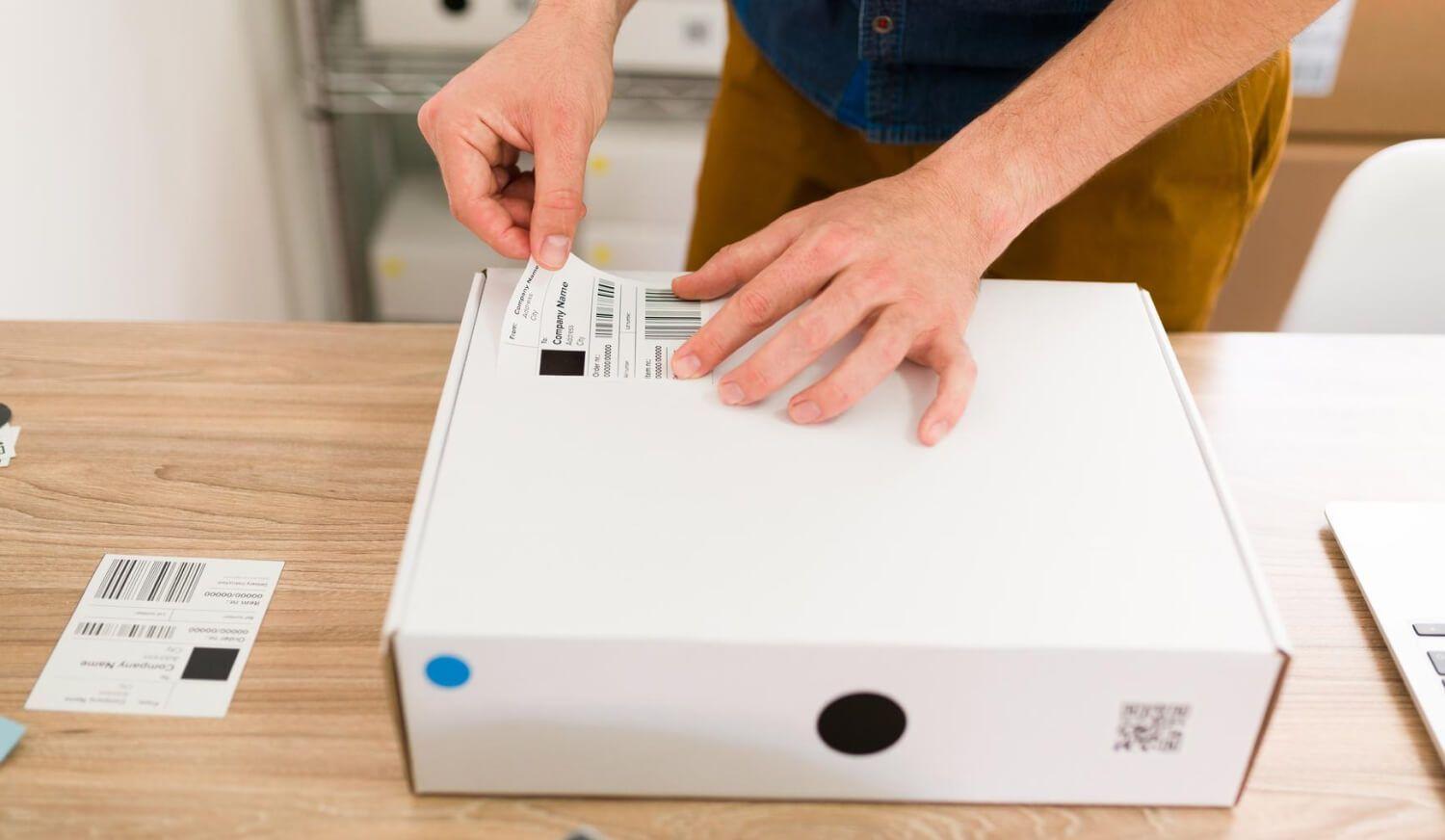
A box is more than just packaging. It’s the first impression for the customer. Especially in cross-border shipping, packaging plays a dual role: protecting the goods and complying with international standards.
- Sturdy outer packaging: Double-walled cartons are a must, especially for heavier products.
- Cushioning material: Bubble wrap or paper protects against shocks; always fill voids.
- Address field: Clearly visible, not covered by tape.
- Document pouch: Attach invoices and customs documents transparently on the outside.
A practical example: A spare parts retailer regularly shipped fragile components to Lyon. By switching to custom-sized boxes with foam inserts, transport damage was reduced by 80 %.
Proper packaging does not mean extra effort but long-term cost savings and satisfied customers.
Permissible size of shipments to France
Not everything fits in every box and not every shipment fits into the carrier’s standard network. For smooth shipping to France, size and weight limits must be observed:
- Maximum weight: Usually 31.5 kg for standard services (UPS allows up to 70 kg).
- Maximum girth: Length + 2 × Width + 2 × Height (usually up to 300 cm).
- Longest side: Often limited to 175 cm.
Packages exceeding these dimensions are considered bulky or freight goods, meaning significantly higher costs and longer transit times. For example, an online retailer from Berlin once shipped a surfboard to Bordeaux. Instead of a standard parcel, a freight forwarder had to be booked and the shipping costs were five times higher.
Proper measurement planning saves real money.
Which goods are not allowed to be sent to France?
Not everything legally sold can automatically be shipped. French customs and postal authorities have detailed regulations that every merchant should know before sending a parcel. Violations can lead not only to returns but also often to heavy fines.
Overview of prohibited or restricted goods:
- Dangerous goods: Includes flammable liquids, gases, lithium batteries, or chemicals. They pose a safety risk and are excluded from standard shipping.
- Valuables: Cash, precious metals, and jewelry are not allowed in normal parcels. Such shipments require special secured transport solutions.
- Food: Perishable products like fresh meat, fish, or dairy must not be transported without suitable cooling. Packaging and shelf life must comply with strict regulations.
- Medicines: Shipping pharmaceuticals is only permitted with official authorization and appropriate documentation. Pharmacists and manufacturers use specialized shipping routes.
- Weapons and ammunition: Transport by private individuals is strictly forbidden and subject to very strict regulations in France.
For merchants regularly organizing shipping to France, product categories must be checked before every dispatch, and special shipping services booked if necessary. This reduces risks, protects against penalties, and ensures smooth delivery.
Delivery time for parcels to France
Distance does not equal speed. Although France is a direct neighbor, delivery time varies significantly depending on the service level and destination region, which must be planned for when shipping to France:
- Standard shipping: 2–4 working days to mainland France.
- Express shipping: 1–2 working days, sometimes even the next day.
- Bulky goods and pallets: 4–7 days, depending on the freight company.
For merchants, it is important to remember that these are estimated transit times. Holidays, customs inspections, or seasonal peaks (Black Friday, Christmas) can cause delays. Transparent communication with customers pays off.
Parcels to the French overseas territories
A special case is Guadeloupe, Martinique, Réunion, or French Guiana. Here, delivery times increase significantly, often 7 to 14 days by air freight, several weeks by sea freight. Costs are higher, and customs formalities are more stringent.
Companies should carefully check whether shipment to these regions is economically viable and inform customers about lead times in advance.
Address format for shipping to France
An address is like a compass: Only if it is precise can the shipment find its destination.
Clear guidelines apply for writing addresses when shipping to France. Errors in street, house number, or postal code quickly lead to delays or even returns.
Basic rules:
- Order: recipient name, company (if applicable), street and house number, postal code + city, FRANCE.
- Uppercase letters: the city is usually written in capital letters.
- No special characters: umlauts or special characters should be replaced (e.g., “É” → “E”).
Example address:
M. Jean Dupont
12 Rue de la République
75001 PARIS
FRANCE
Those who regularly send a small parcel to France should automate address labels via a shipping portal. This minimizes errors and saves valuable time.
Postal codes for a parcel to France
Postal codes are the backbone of logistics. Without them, merchants risk delays, detours, or extra costs. Understanding the French postal code system is essential for shipping to France.
Structure of the French postal code system
The French postal code system may seem simple at first glance, but there’s a clear logic behind it. Those who understand this logic can avoid address mistakes.
- Five digits: Each postal code in France consists exactly of five digits.
- Department code: The first two digits indicate the department (e.g., 75 = Paris, 69 = Rhône/Lyon, 13 = Bouches-du-Rhône/Marseille).
- City and municipality: The last three digits differentiate municipalities or districts within a department.
A typical example is 75008 PARIS: “75” stands for Paris, “008” for the 8th arrondissement.
Special features on mainland France
Even within mainland France, there are differences relevant to shipping:
- Large cities: Paris, Lyon, and Marseille have many postal codes divided by arrondissement.
- Rural areas: In smaller communities, one postal code often covers several villages.
- Special codes: Some facilities, like military bases or large companies, have their own postal codes.
This means not every postal code directly refers to a single city. Those working with large datasets should always combine addresses with city names.
Corsica and special cases
The situation is especially interesting in Corsica.
- Corsica is officially divided into departments 2A (Corse-du-Sud) and 2B (Haute-Corse).
- However, address labels often use “20” as a prefix. Example: 20137 Porto-Vecchio.
- For merchants, it is important that IT systems accept this deviation; otherwise, error messages may occur.
Those regularly sending parcels to the island should test systems in advance and manually correct if necessary.
Overseas territories
Even more complex are the overseas territories.
- 971 = Guadeloupe
- 972 = Martinique
- 973 = French Guiana
- 974 = Réunion
- 976 = Mayotte
These codes always begin with “97” and include an additional two-digit area identifier. For logistics, this means longer transit times and full customs regulations apply.
Practical tips for companies
To avoid mistakes with postal codes, some best practices are indispensable for successful shipping to France:
- Automated postal code validation: Ensure postal code and city match before dispatch.
- Use address databases: Many shop systems can validate postal codes automatically.
- Check postal code and city: Especially for similar names (e.g., “Saint-Denis” appears multiple times), combination is crucial.
- Returns management: Incorrect postal codes increase the risk of returns which cause unnecessary costs that are easily avoidable.
Following these rules consistently saves money and builds customer trust, as parcels arrive reliably and without detours.
Customs regulations for shipping to France
Customs are no obstacle, as long as you know the rules. Since France is part of the European Union, goods from Germany generally require no customs declaration. But beware: exceptions prove the rule.
Key points:
- Within the EU: No customs form is necessary for sending a parcel from Germany to France.
- Exceptions: Alcohol, tobacco, medicines, or certain electronics may be subject to quantity restrictions.
- Third-country goods: If the shipment contains products originally imported from non-EU countries, proof may be required.
This means companies should keep documentation clean, attach invoices externally, and check special regulations for sensitive products in advance. Transparent information avoids unnecessary delays.
Shipment tracking to France
Nothing reassures merchants and customers like a click showing the parcel is on its way. Modern shipment tracking systems to France provide real-time data: from pickup through sorting hubs to final delivery.
An example: A fashion retailer in Munich ships about 200 parcels daily. Through tracking updates to buyers, service inquiries (“Where is my parcel?”) declined by over 40 %. At the same time, trust increased because customers know exactly when their delivery arrives.
Merchants who regularly receive parcels back from France (returns) also benefit: tracking is available and supports transparent logistics.
Shipping to France with Shipstage
More choice. Less effort. That’s the core of Shipstage. Instead of laboriously working through rates of individual providers, the platform bundles all options at a glance.
Advantages for companies:
- Real-time price comparison: All relevant carriers for the parcel to France.
- Automated documents: Shipping labels and accompanying papers are generated automatically.
- Returns management: A parcel from France to Germany is as easy to organize as outbound shipping.
- Tracking integration: Customers see directly in the shop where their shipment is.
- Flexibility: Whether standard parcel, bulky goods, express, or economy: Shipstage offers the right solution.
Anyone looking to ship a parcel to France cost-optimally today will find the ideal partner here. Whether single shipments or large volumes: Shipstage connects merchants with the right providers and streamlines the process.
FAQ
Which holidays in France can delay delivery?
On national holidays such as July 14th (Bastille Day) or May 1st, delivery usually does not take place. Anyone sending a parcel to France should also keep regional holidays in mind, as these can also cause delays.
What is the cheapest parcel shipping option to France?
The cheapest shipping is typically the standard rate with a longer delivery time. Platforms like Shipstage allow providers to be compared and costs optimized.
Are parcels delivered in France on Saturdays?
Yes, many parcel services deliver on Saturdays, but not nationwide. In rural areas, delivery may be postponed to Monday.
Is my parcel to France insured?
Standard rates typically include only basic insurance. For valuable goods, additional transport insurance is recommended.
Can I have a parcel picked up in France?
Yes, pickups are possible and can be booked directly with the provider or via Shipstage. A preferred pickup date can also be set.
Are there special regulations for returns from France?
Returns are subject to the same regulations as outbound shipping within the EU. Merchants should provide clear return labels to simplify the process for customers.